30 May 2026
A Page-Turner for All Seasons
I have a complicated relationship with reading that I think a number of people can relate to. Simply put, I blame school and I blame movies. The latter is straightforward enough. I grew up in a golden age of cinema: Star Wars, Indiana Jones, Back to the Future, The Princess Bride, Big, Ferris Bueller's Day Off, Ghostbusters, Short Circuit, The Goonies, Labyrinth, and too many others to name. These movies were every bit as deep and thematically complex as any book, and all I had to do was push Play on the VCR. As for school, bear in mind that I’m not mad, only frustrated. The biggest problem is on my end; I never got the hang of speed reading. I figured, if someone wrote all this, the least I can do is read all of this. When you’re reading on your own, who cares? With school, however, not only are you expected to read the book within a timeframe, you’re also going to be quizzed on it. Therein lay the problem, you want to get through the book quickly, but you’ve got to retain as much detail as possible, otherwise you won’t do so well on the assignment. It’s simply a skill I never got to develop properly. Some people got it. I didn’t.
In recent years, I feel I’ve gotten a little better at it, and have been able to polish off some books fairly quickly. There’s a caveat to this, however, that the book is between 200-300 pages or, according to its audiobook counterpart, able to be read in 8-10 hours maximum. Even if I only read on weekends, that’s a book a month at my slowest.
When I was gifted an audiobook of Project Hail Mary, I made an exception (and I'll probably make a few more exceptions that I'll talk about later). It’s 16 hours, but there’s a twist. The book switches between the present day plot and a past flashback. It’s rather like reading two books at the same time, which is a surprisingly good way to stay engaged with a plot that might otherwise drag. That may sound like the problem is with my attention span, and that’s fair. Some stories take more telling than others, and a tighter plot doesn’t necessarily make for a better book.
Someone on social media (I can’t find where now) was talking about the state of television, specifically streaming shows, how there’s so few episodes per season and we have to wait sometimes several years for the next season. They went on to elaborate that sometimes a show would just have an episode in which nothing happens and that this is becoming a lost art. These are sometimes called Bottle Episodes, depending on who you ask. A more cynical person would call them Filler. Bottle Episodes are designed to be self-contained and usually intended to give audiences a breather between longer or more significant plot points. They’re typically confined to a single location and are often more dialogue-heavy than a standard episode. Reasons for a Bottle Episode will, once again, depend on who you ask. Writers like and will vehemently defend them because it's a chance to flesh out their characters. They're also typically born of necessity, like a show going over budget on an earlier or upcoming episode.
Here’s the thing about streaming versus traditional television regarding filler: There are no time slots to fill anymore. I was thinking about this when finishing off season two of My Adventures with Superman. I never really got into any of the Superman comics growing up, but when it comes to the Man of Steel’s other media appearances, I’m always curious to see how it works out. With My Adventures with Superman, every episode was an absolute banger, not a single moment wasted, not one episode that could be written off as filler. Between the two seasons, the total number of episodes is 20, the first half in 2023 and the second half in 2024 (as of this writing, the third season is about two weeks away). That got me thinking about that old Lois and Clark series from the 90’s, the one with Dean Cain and Teri Hatcher. That was a show that felt like it was on forever. When I looked it up, I found it was only four seasons spanning 1993 to 1997, but each season was 22 episodes. Do you remember all of them? I sure don’t. Of course, it’s hardly fair to compare a live-action superhero show from the mid-90’s to a modern animated program nearly 30 years apart; animation is expensive and therefore doesn’t have time for filler. Still, when you’re bringing Superman to the small screen, maybe quality should take precedent over quantity. Sure, watching Clark Kent, mild-mannered reporter for the Daily Planet, try to balance is his secret identity with his relationship with Lois is part of the mythos, but peppering in a few breakable sets and props isn’t exactly making the most of said mythos.
As for the time between seasons, I can’t help but suggest to these impatient viewers… maybe read some books. You’ve got time.
21 September 2025
The Barbarians at SETI
Hey, who’s up for a little existential dread wrapped up in nostalgia by way of a 90-minute toy commercial featuring blood, body horror, and genocide?
Whenever nostalgia-based content creators bring up pieces of media that “traumatized” us as kids, there’s a fairly familiar list of usual suspects and often with Jim Henson’s The Dark Crystal at the tippy top. Other entries on the list may include The Transformers Movie, The Neverending Story, and The Secret of NIMH, among many others of that particular era. I saw these films back in the day (or at least parts of them before turning off the TV in horror) and they certainly had an effect on me not unlike that on my peers. However, there’s one movie that it seems no one talks about that definitely had an impact on me as a kid, and that’s the G.I.Joe Movie from 1987. What separates this one from the others on those lists is a kind of double-whammy, scaring me as a kid and then unexpectedly giving me severe existential dread as an adult.
Casting my mind back to around 1987 or maybe 1988, I was in my neighbor’s basement watching cartoons with their kids, and the G.I.Joe Movie was on. Originally slated for theaters, the poor box office performance of Hasbro’s previous animated outing (Transformers) led the film to be released directly to video and ultimately to television in a serialized format. The movie centers around the titular Joes going up against an ancient race hiding away under a dome of ice in a frozen wasteland. Called Cobra-La, these ancient serpent worshippers plan to launch a bio-terrorism attack on the whole of humanity. Massive spore-pods are launched into orbit. Upon ripening, the spores will descend upon the Earth, infecting everyone they come in contact with, reducing humanity to mindless beasts. I think this was my first exposure to the concept of a fate worse than death. Seeing these ordinary adults going about their day violently transformed into scaly, savage subhumans is pretty dark for a 6 or 7-year old kid. It was certainly a stark contrast to the Joes’ usual goofy conflicts with the ruthless terrorist organization Cobra, who only wanted to rule over the civilizations of the world rather than outright destroy them. I guess this was also my first introduction to the idea of different kinds of evil, those who wanted to take over the world versus those who wanted to watch it burn.
Fast-forward many years, maybe to the last five or so. I’m a grown man in his forties watching random movie clips and reviews on YouTube. The G.I.Joe movie came up and reignited memories of the absolute body horror that was Cobra Commander’s origin story, among other things like the aforementioned mindless beasts. This time, though, something else caught my attention, something that went over my head back in the 80’s. Cobra-La’s main gimmick throughout the movie is that their technology is organically-based. In other words, they don’t build things so much as grow them. Nearly everything at their disposal is alive. Even door keys are odd-looking beetles and rolling out the red carpet involves a literal army of little crab-like creatures. Kind of puts the Flintstones in a new light, doesn’t it?
Cobra-La is ruled over by Golobulus, voiced by the original G.I.Joe himself, Burgess Meredith. Around the halfway point in the movie, he gives us an exposition and lore dump about how Cobra-La came to be as it is. 40,000 years ago, they lived in harmony with nature, engineering it to their will and establishing an advanced civilization in this period of pre-human history. Climate change, specifically an ice age, brings their entire way of life to a screeching halt and forces them to take refuge under an ice dome. Following this is the rise of what Golobulus calls “the barbarians”. He’s of course talking about humans as we’re shown a pack of Neanderthals poking around a forest in search of their next meal. The flashback makes a time skip worthy of 2001: A Space Odyssey and shows humanity launching the space shuttle. Narration from Golobulus highlights a key difference between the age of Cobra-La and these pesky barbarians known as man. Whereas Cobra-La used organic matter as its foundation, human beings harnessed inorganic materials like stone and metal.*
Let’s think about that a minute. There we were, eons ago, poking around the woods eating grubs and fruits and whatever else we could forage. Somewhere along the way, one of our ancestors had an epiphany. If we took a stick and sharpened it to a point using a rock, we could take on larger prey and enjoy a greater feast. Then, someone hit on the idea of taking those rocks and using the antlers and bones of that prey to shape them into whatever we needed to hunt ever-bigger prey. Following that, someone else noticed a special kind of rock, one that’s got shiny bits in it, and who doesn’t love a bright, shiny object? One discovery leads to another, and next thing you know we’re using spools of copper wire and these weird things called semiconductors to send messages over great distances. Needless to say, as far as we know, no other species on our planet has made these discoveries, much less built on them to a point of manipulating electromagnetic radiation to communicate. Some animals use tools, it’s true, and whales have a surprisingly wide-reaching communications network, but that’s hardly competition in the tech sector… unless we’re vastly underestimating the whales and Star Trek IV is dead on the money.
Speaking of alien intelligences, SETI, the Search for Extra Terrestrial Intelligence, casts a fairly broad net in their search for life beyond our own world. Primarily, though, they’re interested in establishing communication with alien civilizations that have reached at least the point of sending radio waves through space. I mean, if you sank all that grant money into leasing time on a massive radio telescope, that’s where you’d focus the most of your efforts. That’s not entirely fair. There’s actually a decent precedent for the notion that our first contact with an intelligence beyond our solar system could be in the form of telecommunications, namely the famous Wow! Signal, detected in 1977 and originating from somewhere in the constellation of Sagittarius. While we don’t know what the signal necessarily “said”, the fact that it was such a strong signal indicates it being more than some natural phenomena like a charged hydrogen cloud or one of many other potential explanations floating around since the discovery.
I’m firmly, ardently of the belief that we are far from alone in the universe. Given the billions and billions of galaxies, each with billions and billions of stars, with billions of planets in each galaxy, it would be an astronomical impossibility for our little blue marble to be some grand exception to the rule by having life on it. Of course, we have to talk about the word “alone” in this context. As for what kind of life is out there in the universe, I’m in Camp Sagan in that while there’s most certainly life beyond our home star’s Oort Cloud, the likelihood of that life having visited us and walking among us is a little sketchy. The distances are vast enough for radio messages to take lifetimes at best, much less spacecraft. That is, life could exist, just not the kind that’s followed the same path that we have.
This is tapping on the lid of a very, very big can of worms in terms of answering the question of whether or not we’re alone in the universe. The Fermi Paradox, The Drake Equation, The Dark Forest, and probably most concerning is The Great Filter. The Great Filter is the notion that there may be some great barrier in the progress and development of any intelligent species that’s either extremely difficult to overcome, or downright impossible. This barrier can be most anything from exhausting resources to self-destruction by warfare. Essentially, it’s a point at which a civilization cannot sustain itself and either needs a massive paradigm shift or collapses on itself in extinction. As far as humanity goes, there’s two possibilities, the Filter either being ahead of us, or hopefully behind us. Maybe harnessing those inorganic materials and developing technology was the Filter. Maybe leaving this planet or at least getting a start on asteroid mining is the Filter.
Of course, that leaves the final question of whether or not we’re the first to get past the Filter.
*I learned while writing this of a film from 1959 called The Atomic Submarine, which features humanity dealing with an aquatic UFO that is able to heal itself from attack by way of an organically-based technology.
04 May 2025
Star Wars Day 2025
In observance of May the 4th, this is my own personal recommended/definitive watch order of the Star Wars films if you're somehow still uninitiated or know someone who is. This is movies only, no TV shows, no videogames, no novels, just theatrical films so you can manage your watch time easier.
Revenge of the Sith
Rogue One
A New Hope
Empire Strikes Back
Return of the Jedi
The Force Awakens
The Last Jedi
Honorable Mentions/Qualifiers:
Jury's still out on Rise of Skywalker. I like it a little better every time I see it, but not by very much, and I haven't forgiven it for how angry it made me the first time. I'll leave you to guess the moment when I had to bite my tongue to keep myself from yelling "Bullshit!" at the screen and ruin everyone else's theater outing. The Han Solo film is in a similar standing; The first time I saw it, I was not impressed, but upon a rewatch some time later, I enjoyed it a lot more. Overall, though, while it never made me angry like Rise, I find it a very uneven movie. Basically, all the scenes with Han and Chewie are great. The rest of the film is a rather bland and uninspired heist movie. I've always had mixed feelings about Ron Howard as a director. Visuals aren't his strong suit and I think he trusts his actors a little too much at times, not really pushing the best performances out of them. In the best scenarios, you get someone seasoned like Tom Hanks in front of his camera, and you're in for a good time. In the worst, you put him in charge of some relative unknowns who haven't found their voices, and it's clear he prefers a hands-off approach with little to fall back on. This leads to actors looking a tad lost on screen, which at least is on brand for a young, fish-out-of-water Han Solo.
As for the two prequel films I left off the order, I should point out I'm actually something of a Phantom Menace apologist. However, at this point in the franchise's lifespan and with everything else we've been given to spend our time with, I'm okay with saying you can skip that one. Before Rise, Attack of the Clones was the one Star Wars film I actively disliked. Even then, I once made a list of 5 things I liked about it. I don't quite remember what they are anymore (I don't even think I ended up posting it to Tumblr which I originally wrote it for). Also, fun fact about Attack of the Clones: this was the first Star Wars movie to not be filmed on traditional 35mm film. It was shot on high definition digital video... and unfortunately, you could tell. I still remember when I saw it in the theater the first time, there was a fairly dark scene with Obi-Wan and Anakin on opposite sides of the screen talking, and you could see compression artifacts in the dark space between them. It was practically a checkerboard pattern of deep purples and dark grays, with each square as big as the actors' heads. Roger Ebert made a similar observation in his review, so I know my experience was not unique. Fortunately, the technology behind the transition from analog film to digital video, especially in projection, has gotten a lot better. It was certainly no longer an issue by the time we got to Revenge of the Sith.
Speaking of clones, I'm also not bothering to include the animated Clone Wars film, as that was really more like a pilot for the TV series that just happened to get a theatrical run. Thanks to a modest budget of less than 10 million dollars, it was able to make a fair bit of money at the box office, though still stands as the lowest grossing Star Wars movie at just shy of 70 million. For comparison, Solo made a little under 400 million dollars against a budget of 330 million and that was considered enough of a failure to get the Obi-Wan movie scrapped and reworked into a miniseries on Disney+. As a rule, studios tend to take about half of the gross (and budgets don't include expenses like marketing and promotion), so, depending on who you ask, Solo is the first Star Wars movie to lose money. The Mandalorian & Grogu is set to release next year in theaters. It will be interesting to see how it fares.
While this has been primarily a watch order list, I'll touch briefly on ranking the Star Wars films, most favorite to least favorite. I'm not going to give the full rundown; as I've said, jury's out on a few of them and it's sometimes hard to qualify what's a "least liked" and what warrants an "actively disliked". In any case, it would be a tier list, rather than assigning each movie a unique ranking number. For example, I love Last Jedi and Rogue One. I love them equally, and it's for exact opposite reasons. One honors the past, the other looks towards the future, and I simply could never put one above or below the other. It wouldn't be fair. On a similar note, although A New Hope is not my favorite, I'd either have to leave it off the list entirely or put it right at the top purely on principle. Just as I respect Last Jedi for taking risks and Rogue One for sticking to what it knows, I respect A New Hope for taking that first step, walking so the rest could run. If I woke up tomorrow to find all the other Star Wars media apart from A New Hope had been erased from existence, I'd be very sad... for about twenty minutes, and then I'd sit and watch it for the umpteenth time and all would feel right with the world again.
May The Force be with you.
24 August 2020
Unhinged: The Batman Movie Nobody Wanted
Full Disclosure: I don't hate Uwe Boll. I legitimately admire his business sense. I also like In The Name of the King and Rampage. I'm going to lambaste the shit out of him here, but let the record show it doesn't come from a place of contempt, only brutally honest criticism.
It's not easy being Russell Crowe. I should probably have another disclosure about him, how the controversies about his personality, his run-ins with the law, have been painfully blown out of proportion. He's a walking example of the "But ya shag one sheep!" joke. Tom Cruise at least has Top Gun and the Mission Impossible franchise to balance out his... more eccentric attributes. Crowe's filmography has been almost experimental for the most part, as if directors and producers don't quite know what to do with him. His early career tried to play him up as a suave, smooth-talking charmer or relatable everyman/hearthrob (A Beautiful Mind, LA Confidential). He seems most at home in action (Gladiator, Robin Hood), but he's also tackled very cerebral dramas (Master & Commander, Cinderella Man). Then, there's Noah and Man of Steel. Jury's out on those. I mean, I like them, and he's the best part of the latter.
His films are few and far between compared to most auteur A-listers, which unfortunately means every new entry is a tough sell against the deluge of controversy. When the trailer for Unhinged was released, there was no shortage of wannabe jokers in the comments calling the film a cinema verite style documentary about Crowe's daily life. I want to give him the benefit of the doubt that this is him effectively owning the controversy, some para-meta-ironic middle finger to his haters, but he's either too late to the party to pull the prank on the pretentious preppies, or he's killed the man and become the monster.
I'm calling this an unofficial entry/preview in a series of posts I've got in the pipeline entitled, "Reasons I Shouldn't Write Screenplays" an idea I freely admit to stealing whole cloth from Noah "The Spoony One" Antwiler. They're as much musings and meditations on various tropes and trends of the Hollywood dream factory as they are semi-serious sales pitches for reboots, reimaginings, retoolings, or redirects of some of the biggest franchises and flops dotting the greater pop culture landscape.
The plot of Unhinged takes it cue from horror writing 101. Take a mundane, inconsequential thing, and turn it into a matter of life and death. This isn't a bad thing, only a little tired. No movie is ever released in a vacuum and some of the dialogue is not helping to convince people of idea parallelism (a fancy legalese-esque word for a coincidence).
A single mother (Caren Pistorious) is driving home with her son when she gets stuck behind a pickup truck at a green light. In a fit of frustration, she emphatically honks her horn before giving up and driving around. The owner of the truck (Crowe) later confronts her that a brief tap of the horn would have been sufficient while explaining that he's been having a bad day, apologizing for earlier while expecting the same from her. She stubbornly dismisses him, and the conflict ensues. At one point on the driver's path of systematic destruction in the name of revenge, he reveals his intention is to show her what a bad day really looks like.
That line struck more than a few familiar chords with film-goers, with many mentions of the Alan Moore story The Killing Joke going hand-in-hand with the comparisons to the recent Oscar nominee Joker, starring Joaquin Phoenix. The Killing Joke was written in 1988 hot on the heels of Frank Miller's Dark Knight Returns series in an effort to convince the wider public that the caped crusader was not the bright and colorful shark-repelling deputy cemented into the public perception by the Adam West-led TV series. It attempts to offer an origin story for the Joker, one that's meant to paint him as a tragic figure, a victim of circumstance. As part of his plot to garner sympathy for his situation, he opines that anyone could have become the Clown Prince of Crime as a result of "just one bad day."
Hollywood has toyed with this idea in the past, examples including the likes of Taxi Driver, The King of Comedy, Straw Dogs, and Falling Down (to name a few). Those movies predate the Columbine disaster by many years, and while mass shootings and other acts of terror by disgruntled individuals have a history predating those films (Dog Day Afternoon being loosely based on a real life event), an apparent increase in violent shootings and assaults have brought this trope under a new light of scrutiny. Much of the scrutiny feels misdirected, like it's working under a false premise that the main character of any movie is meant to be perceived as a heroic ideologue. It's true many misunderstanding movie-goers (mainly male) may make a manifesto of the malignancy and malice, missing the masqueraded meaning regarding motives, means, and opportunities. That is, these characters are only heroes by default, the lessers to greater evils. The circumstances that created them and drove them to their extremes are not triumphs, but tragedies not unlike those that befall the men who slay monsters only to become them in the process. The modus operandi of these misunderstood ordinaries are not meant to be mimicked outright, but mulled over.
To put this process in perspective, Roger Ebert described the comedic machinations of the Naked Gun movies thusly: You'll laugh, then laugh at yourself for laughing. You may well find yourself rooting for Michael Douglas as he obliterates a phone booth with machine gun fire to spite an impatient man eager to make a call. It's easy to find yourself dancing to Joaquin Phoenix's beat as you traverse any long sequence of steps. None of these reactions are inherently wrong. That's the magic of movies, if not the whole of storytelling in general.
I made an off-hand comment to a friend on Twitter about how Unhinged was essentially what we'd get if Uwe Boll adapted The Killing Joke but ran out of money and/or lost the rights to the Batman license partway through. Obviously, the film in no way, shape, or form resembles The Killing Joke beyond some throwaway lines that touch on the same philosophies about human nature, the choices we make, and our responsibility in light of the consequences of those choices. That said, the more I thought about it, the more I realized this plot has a stronger tie to the Batman universe than likely anyone involved in the film realizes.
Put simply, the Joker is no stranger to road rage.
Joker's Favor is an early, but much-loved episode of Batman: The Animated Series. While typically falling shy of any top spots, it often ranks highly on many best episodes list, and it's not undeserved. It also takes a mundane, inconsequential event and turns it into something far more sinister. An accountant named Charlie (voiced by Ed Begley Jr.) drives home from a bad day at work. His impatience with other drivers ends up getting him face to face with the Joker. Joker lets Charlie go on the condition that he may well ask him for a favor some day. Two years elapse before Charlie, despite having moved and changed his name, is contacted by the Joker to fulfill his end of the bargain from earlier.
What follows is a rather predictable turning of the tables in the cat and mouse game via an ordinary man being driven to extraordinary actions, though with the saving grace of a timely and graceful step back from the edge. What makes it work is the show's complete and utter commitment to the subject matter. It's played perfectly straight and allows you to suspend disbelief on how things will turn out for those involved.
Unhinged, just like Charlie's future in Joker's Favor, could go a number of ways. Monsters can be slain as easily as they can be made. Currently, its box office performance (including a delayed release thanks to the Coronavirus Pandemic) is less than impressive, a few million shy of halfway to its 33 million dollar budget (Falling Down was made for 25 million in 1997, a little over 40 million adjusted for inflation). Critics have been equally cold, dismissing it as uninspired, unable to justify its own existence against other films of its stated variety. Those jokes about Crowe's temper seem to have run their course. As for those other comments calling Caren Pistorious' character a Karen...
21 July 2019
A Random Thought To Keep The Light On
I only saw the trailer. It had to be at least 20 years ago. Part of the reason it sticks in my mind is that although I saw it on television, it was completely in a foreign language, even the narration. I want to say it was in French, but I can't be sure. It was so out of the blue for this totally foreign advertisement to insert itself into the airwaves. I remember I even saw it more than once, so clearly this was a thing that someone somewhere wanted to hype to high heaven. There was no release date beyond what I can only surmise was a "coming soon" or some other vague time frame.
As for what it was about, I have only images and flashes, so it's entirely possible my memory has substituted certain details for others. Anyway, the central "event" the trailer harps on is two people bumping heads in a pool. That's the most concrete thing I can recall, a man and a woman, underwater, swimming straight into each other. There's a scene of one of them in a hospital bed (the woman, I think) talking to a nurse or orderly, with the camera very, very far back. The title was something rather long, practically a sentence, and it was overlaid on the same shot as the head-bump, looking up from the bottom of a swimming pool. For all I know, it's either a barebones romantic comedy with an exotic location or it's some magic realism farce about people swapping bodies Freaky Friday-style.
I wrote a description slightly less detailed than what I've got above over on Yahoo! Answers but didn't get a single bite. I even remember asking a South Korean friend I've since lost touch with if she recognized anything because she's a colossal French film buff. Nobody seems to know a damn thing about this movie and I'm almost wondering if I could have made it up. Funnily enough, Quora isn't exactly set up for long, detailed questions, but jumping off my point about a possible false memory, someone on Quora shared with me that they were convince for years the movie Space Jam was just some dream he had. It's one of those quirky little things about our memories, how they can be so vivid and at other times so fuzzy we literally can't tell them from dreams or even our own imagination. This is where I'd also bring up the Mandela Effect, but I'd rather focus on this mysterious foreign film trailer from the forever ago.
Maybe someday I'll tell you all the tale of how for years I never knew there was a second half to Logan's Run beyond Logan and Jessica ascending the steps of the Lincoln Memorial.
02 April 2019
Jumbo Shrimp
It's not bad, but it's borderline forgettable and hollow. I'm hard-pressed to recall an instance of seeing a weaker story told with less conviction. All the ingredients are there. We're introduced to this big cast of colorful characters, and the half that aren't lost on how to play their parts only get maybe 5 full minutes of characterization out of the entire runtime. So, when our merry band of misfits all rally together to save the day, all I can think is, "and you guys are...?"
The art direction is rock solid and the score is beautiful, but the story bites off more than it can chew in an attempt to pad out the plot of the original, which has now been reduced to a 20-minute abridgment serving as the opening act. The rest is equally hurried and scattered, as though bored with its own concept which at times feels borrowed from other movies. The pink elephants do make an appearance, but I doubt it will be long before we seen side-by-side screencaps of it and the opera scene from Revenge of the Sith.
Of all the forthcoming live-action/realistic CG versions of Disney classics coming out this year, this was the one I was most looking forward to because it seemed like it was going to offer more than a scene-by-scene reenactment of the source material. Technically, I got what I wanted, using the original premise as a jumping-off point to tell a bigger story. Unfortunately, that bigger story is so thinly-spread and half-hearted in execution even the finale feels like padding, all half-finished ideas and tired platitudes.
Full disclosure: "Baby Mine" still makes me cry.
17 March 2018
A Wrinkle in Time
Only two things truly bug me about this movie, one's a nitpick that's in no way a dealbreaker, and the other's more of a question. Firstly, Aunt Beast is mentioned once and seen for all of 3 seconds. It's a somewhat creative look, but easily the weakest piece of art direction in the film. The stage play had furry starfish the actors could shift around inside to operate different limbs, emphasizing their non-humanoid form. Here, we have mammoths with spider-legs, seen way off in the distance... in a haze... before swiftly moving on to the next scene. Like I said, not a dealbreaker, and if the Ixchell had simply been omitted, I wouldn't have even cared. Speaking of omissions, notably absent are the twins. The Murry family is only Meg and Charles-Wallace. Granted, they didn't have a big role in the book, but they were important later in Many Waters. What I'm wondering now is if Disney is going to go ahead and make the other Time Quartet books (Quintet? An Acceptable Time is canon...ish? I'm spoiled on numbered spines, what's wrong with me?) are they just going to have the current collection of kids carry on and rewrite the plot to them, or are they somehow going to find a way to introduce the twins later, maybe as visiting cousins? The Time Quartet In Five Parts (?) was essentially Young Adult fiction before the great Hunger-Potter Explosion, when publishers didn't market these much outside of school book fairs, and the authors tended to play pretty fast and loose with overarching structures and deadlines. My point is the cynic in me fully expects Disney to try and do for the Time Quintaret as a franchise, but it doesn't look like they're taking any steps to do that, and while part of me is okay with that, it's a very odd strategy for The House Walt Built between Marvel and Star Wars. It's like I want more but I'm afraid to ask, if that makes sense.
25 February 2018
Annihilation
Arrival dealt with issues of communication, language, philosophy, and cultural bias to tell a reality-bending yarn about cause and effect. Annihilation tackles issues of identity by exploring a somewhat obscure region of the uncanny valley. I mentioned Solaris, in which an alien consciousness tries to answer the messages its picking up from a space station by creating these "approximations" or "estimates" of what it thinks would be good answers to these questions, often with unintentionally violent results. Annihilation looks at the same dynamic through what amounts to full-fledged body horror. Most of the time, it's subtle, even artful in places. Other times, the existential terror of questioning what we do or don't consider familiar gives way to an outright shock and awe gorefest. These scenes are few and far between, with only one that had me looking away from the screen, but they overall felt hollow and superficial, even juvenile on some levels. I'm no prude, mind, but with the way these scenes were framed by the rest, I have all suspicions that this movie could have gotten away with a solid PG-13 rating than trying to reach for R by the skin of its teeth and reaching for the low-hanging fruit of sensationalism.
For the purposes of review, this is overall my strongest criticism, and I'll never pretend it's at all elevated above nitpicking. I only bring it up because it did so well to make my skin crawl that when it changed gears to merely making me sick to my stomach, I felt insulted on what I can only describe as an intellectually masochistic level (I'M HERE TO LOSE MY MIND, NOT MY LUNCH, DAMMIT!).
If I had to stretch for a bigger issue with the film, it's got more to do with the aforementioned sub-genre serving as the source than anything that unfolds on screen, and that's the characterization. I've found with the more cerebral sci-fi is that their writers are definitely more deeply in love with their plots than their players. Arthur C. Clarke suffers from this immensely. As much as I love 2001 and Childhood's End for their unforgettable plots, his characters are barely memorable, borderline inconsequential (which you could argue is part of the point, challenging our inflated sense of significance and all that), or even tacky in places. The cast is all fine, it's their characters who are a bit flat and one-note. I suppose it's to help make them easier to project onto or identify with or at least not overshadow or distract from the plot, but I feel like this prioritizing of events over individuals works better for a novel than a movie, since the craft of acting itself is meant to engage your empathy rather than your intellect (it is, after all, the oldest special effect). What even calls this relationship of players and plots into sharp question is when those occasional spots of pure carnage for carnage's sake turns our "audience avatars" into cannon fodder. Annihilation gives you so little to invest in when it comes to characters that when it takes them away, you wonder why it bothered. It makes what should have been a big reveal or harrowing conflict or moral dilemma lose just enough impact to feel like a missed opportunity. You love it for challenging you, and hate it when it pulls punches.
To its credit, there's more hard knocks than soft blows. There are times when the movie is frighteningly beautiful. Last Jedi and Black Panther celebrated color, Annihilation makes it something to fear. Most movies overuse lens flare, Annihilation makes it matter. That's brilliant.
17 February 2018
Black Panther
birds lay eggs,
and Marvel movies are good whenever they're not great.
(tosses napkin on the plate and excuses self from the table)
I swear I'm not trying to be a grouch about this, and none of my critiques are meant to put the movie down. This is one of the better ones, maybe not Thor or the 1st and 3rd Captain America movies, but definitely better than Iron Man 2, possibly the only Marvel movie I actively dislike (if only because I haven't seen The Incredible Hulk, which is only because I can't stand Edward Norton). As for Panther, the extent of my knowledge of the character begins and ends with a miniseries written by Reginald Hudlin and artwork by John Romita Jr., and as far as that goes they nailed the character and lore, delivering on all my expectations. I'm glad they kept the outside references to the other films at a minimum save some cameos and flashbacks, keeping it self-contained (like Doctor Strange) while firmly nested in the overall timeline. I'm certainly glad it didn't pull an Iron Man 2 and grind its own plot to a screeching halt to tell me how great Infinity War is going to be. On the whole, my only true criticism of the film is that while it's self-contained in terms of story, it is all still a bit familiar, and beyond some awesome art direction (What The Last Jedi did for red, Black Panther does for purple), there's not a lot it brings to the table we haven't seen before. There's a little Cap here in the car chases, a little Stark there in the gadgetry department, and a dusting of Thor (or even Guardians) for some of the battle scenes. Again, this isn't bad, but I think sometime after the end of Iron Man 3 and just before the halfway mark of Guardians 2, I may have hit my point of saturation. We had no idea what to expect from Thor or Captain America, certainly not their second installments, and those pre-Disney Marvel adaptations like Daredevil or Ang Lee's Hulk had their issues, but at least their flaws were interesting, even experimental on some levels. Now, we've clearly found a rhythm and a rhyme you can marry to any melody and it won't not produce a chart-climber. I hate saying that given how close to the brink of death the superhero genre has been from time to time, but on the whole the nicest thing I can say about this movie is that if you've loved all the past Marvel films, this one won't disappoint, but if you're maybe growing a little tired of filling out the MCU Bingo card, this isn't going to shake up the game.
Then again, as I've implied, I am one of those weirdos who likes Eric Bana's Hulk and Ben Affleck's Daredevil, so don't let my damning with faint praise deter you from giving it a shot.
09 February 2018
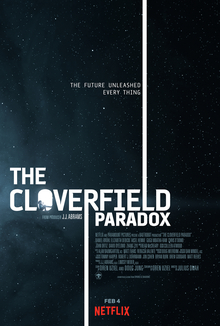
Frankly, Clover, I Don't Care-a-Toss
10 Cloverfield Lane is a serviceable little thriller that tries too hard to create tension and banks even more heavily on a "twist" so predictable that painting itself into a corner is a charitable description. It's that episode of the Twilight Zone you've never actually seen but know the premise and ending to because it's been referenced to death by everything else. Again, it's serviceable.
The Cloverfield Paradox is... a mess. It's a mess from the start. If there's an underlying issue that plagues all of the films in this series, it's that they try wearing too many hats. It worked better for Cloverfield because the genres it tries to mesh have enough elbow room to gel with one another. 10 Cloverfield Lane tries to be a psychological thriller playing off paranoia and speculation about the unknown, but forgoes the character psychology/social commentary in favor of a flashy action set piece of payoff that's almost insulting. Its attempt at genre mixing fails because the parts are incompatible.
The Cloverfield Paradox has this problem and then some. I could almost demonstrate this mathematically, but let's talk about what it means for something to be derivative. There's nothing inherently wrong with a movie being derivative or familiar or even formulaic. Everything borrows from something that came before, sometimes mixing and matching from other somethings along the way. Being derivative does become a bad thing when you miss the all important second step of referring to the past, and that's learning from it. Borrowing works best when you build on what you borrow, shoulders of giants and all that general wisdom. Not only does Paradox borrow from a number of sources without adding its own flavor to the mix, but it handles them so clumsily and ineptly that I wouldn't even call it experimental if I was desperately trying to be nice. If there were more jokes beyond token banter among the characters, I'd think it was a parody.
Going back to what I said about building on what you borrow, one of my favorite horror movies is Event Horizon. If you've never seen it, it's about a ghost ship in space and the salvage crew sent to find out why it mysteriously vanished only to reappear with the crew's innards painting the walls. Needless to say, something's gone horribly wrong, and it's about to get worse. Granted, this isn't an especially great film (it's certainly aged quite a bit) as its premise loses steam around the halfway point and even gets a bit goofy towards the start of the third act. However, the reason it works is that albeit it's not exactly a surprise when we learn just what we're dealing with, it builds up to it. It creates an oppressive atmosphere with just enough plausibility that your suspension of disbelief can boot up slowly enough to ease you into the sillier bits of the narrative unfolding before you.
Now, nearly 20 years later (I was a sophomore in High School when Event Horizon came out), I'm watching this ParaCloverDox mashup and in the first ten minutes, a talking head on a news program the characters are watching warns that this super-science power plant in orbit could not only rip open the fabric of space-time, but actually summon monsters and demons. He uses those exact words and even gets called on them by the interviewer. Why should I care about anything that happens in a movie if the movie itself practically tells me to my face that there's nothing to care about?
Seriously, I think this movie decided to go to Netflix instead of theaters to save itself the embarrassment of trying and failing to stand alongside the likes of Interstellar, The Europa Report, Alien, Solaris, Event Horizon, 2010, Total Recall, and even The Black Hole (which also knew how to build up an atmosphere and get people invested enough to ignore the goofy parts, and did so about 20 years before Event Horizon).
If you want me to say one good thing about it, it's Elizabeth Debicki. She played an alien queen in Guardians of the Galaxy Vol. 2 and brings a commanding presence to this CloverLaneSlusho nonsense that does not deserve her.
18 June 2017
Four Movies
22 October 2014
Famous Last Words
I've been thinking about crowdfunding lately, and not merely because WayForward's new Shantae game is nearing a broader release beyond the 3DS. I started supporting a few people on Patreon, including an artist friend of mine, which kind of got me thinking about what I would do to become a Patreon "creator". Unfortunately, I can't think of anything I'd do regularly that would warrant a kind of subscription service like that.
As for something like Kickstarter or IndieGoGo, I have had some amusing little thoughts from time to time over the past few years: what I would make, how I'd go about getting started, how much I'd ask for, what promises to make, how often to update, and what exactly the money would go towards. I could go on and on about those, and I could go on even longer about the various points of criticism people have brought against crowdfunding (I kind of did a few months ago, when someone criticized the practice as a form of "socialism"), but overall nothing reached much higher than a flight of fancy.
Now, I may start taking it a little more seriously.
About two years ago, I made a short film for Halloween, a disposable little tribute to John Carpenter's Prince of Darkness. It was shot on an old phone, had a silly voiceover, and wasn't very good (though it got a fairly decent response most places I posted it). I'd considered doing a follow up to it, something more tongue-in-cheek as the main gimmick of the short was about the "impending doom of 2012". A few weeks ago, a little idea popped into my head for somethinng different. It would be stylistically similar to last year's, with similar production methods, and probably work better as a kind of demo reel than a proper short film. I sketched up some storyboards and made some "to-do" lists like for props and maybe even locations. It was all coming together so well, I started thinking it may be worth going forward with. Unfortunately, it's been a few weeks, and I don't think I'd be able to finish it in time for Halloween.
Next Halloween, though...
Rather than bash out something unpolished and hurried, I take the opportunity of the time to try and turn it into something with slightly better production values. That's when I started thinking of Kickstarter. I don't want to say a whole lot about it because I could well wake up tomorrow and decide the entire thing's a boring mess that deserves to rot on the back burner until Heaven falls. What I will say, though, is this:
1. I'm not going to ask for a lot of money, and likely it would be for cutting the film together (I'd rather hire an editor than work at it myself, someone with better gear than me). That kind of "in the can" model seems to work out best for filmmakers, especially since it's a lot easier to be upfront about costs as there aren't usually as many setbacks in post as there can be in production.
2. Backers would get an early release of the film (I mean, we're talking about October 2015, here), as well as some incentives I've cooked up.
3. On the off-chance this becomes the next Potato Salad campaign, I do have some ideas about stretch goals, like other actors, a few more scenes, a big screening, a film festival submission, among other things.
So, as much as I don't like to talk about things I'm planning in the near future, let alone next year, I figure maybe I shoud throw this out there, get some feedback and advice as early as possible, gague just how plausible this whole thing may be.
28 June 2014
Wanted 2: ScarJo Boogaloo
27 April 2014
A Broken Piano & A Burning Car
| Pictured: Tangential Learning (this will not be on the test) |
Brief Tangent: Remember AOL Keywords? You know how ad campaigns have started using hashtags as a means of marketing & promotion rather than simply referring people to a website? In all, I don't see any of that as harmful, but something about how this movie markets itself is a bit worrying. The end title to this trailer has the following phrase above its web address:
YouTube Search: Paris Catacombs.
This bothers me for a few reasons. Firstly, the Paris catacombs are a real place, and likely there's a number of YouTube videos about them. This may well have been the intention of the film's marketing team to help spread word about the film and help aid suspension of disbelief by having people do research and get a better appreciation for the source material. Frankly, I don't buy that notion for a second. I think this is a case of YouTube selling search results to the highest bidder, not unlike promoted Tweets. Again, this shouldn't be anything harmful, but why not have the terms in question be the film's title or some cryptic phrase relevant to the movie? Why a vague geographic reference that's likely to flood the search results of people not interested in the film but the actual location? I'm not saying it's socially irresponsible or anything like that, but it's a sign of a bad trend I hope dies.

.png)


.jpg)
.jpg)