10 September 2020

Fear is the Mind-Killer, Mediocrity the Brain Cell-Killer


Disclaimer: like all of my other trailer impressions (which I keep telling myself I'm not going to do anymore), they are only impressions. None of what I'm about to say comes from any sort of insider knowledge and certainly not any kind of advanced screening, much as I wish I carried that kind of clout. It's entirely possible the final film will differ from the trailer and alleviate the concerns I have about it. That said, one of the reasons I started doing more trailer analyses is because I like to work under the premise that a trailer is a movie's first impression, and like in any first impression, you should put your best foot forward. You can call my bluff without showing your hand. When a trailer gives an impression of a movie that turns out to be different than what's on screen come the debut, I feel it's valid grounds for criticism. It's a fine line between piquing my interest and lowering my expectations. 

The trailer for the new version of Dune dropped a few days ago. I've watched it, and my reaction is, "It looks fine." Were I to be pressed for additional adjectives, the most affirmatively I could answer is "Adequate" with alternatives and/or additions consisting of "Competent." I hate to use a term like "Unnecessary" because as Oscar Wilde taught us, all art is fundamentally useless and that's the point. Art should never have to be defended and it certainly should never have to defend its own right to exist. It looks like someone split the difference between the David Lynch take and the Sci-Fi Channel miniseries (from the before time, back when they could spell). Unfortunately, in splitting the difference, the whole seems to have become less than the sum of its parts. Gone is the wonderfully mesmerizing mastery of color and light from the miniseries, traded in for a dull array of grays and browns even in what looks like midday with a clear sky. The cast seems closer to the David Lynch film in terms of star power and potential to play it larger-than-life, but they are notably understated in delivery, almost tired. Also, raise your hand if you thought Jason Mamoa was playing Gurney instead of Duncan

It's all very minimalist, which is where Denis Villenueve shines, but just like Dune 2020 and its earlier iterations of 20 and (good grief) 36 years ago, he seems at odds with his own sensibilities. I've seen two of his movies, Arrival and Blade Runner 2049. I adored Arrival and think it's one of the best thinking man's science fiction films since Under the Skin or The Europa Report. By contrast, I couldn't tell you a damn thing that happened in Blade Runner 2049 except some above average visuals that you can recreate at home. Simply watch the new Dune trailer, but hold up any and every piece of colored glass you can find, swapping them with every new scene. I've got a similar trick for James Cameron movies involving a strobe light and cobalt glass, but we're getting off-topic. 

Here's the complicated relationship I've had with the works of Frank Herbert: I never got into the books, and it's for the same reason I don't actually hold the past adaptations in higher regard beyond technical achievements. The WORLD of Dune, the setting, the lore, the cultures, and the history is all monumentally fascinating. The STORY of Dune, as in the one story that's now essentially been told 3 times (4 including the first book), is painfully dull. At its core, the story of the Atreides and the Harkonnen is a mafia revenge movie set in space and with gently messianic religiosity because that's how science fantasy/planetary romance rolls.

If I were in a more cynical mood, I could make an infographic drawing lines of comparison between Dune and Get Shorty since The Godfather is too obvious. Just pretend John Travolta is House Atreides and Dennis Farina is House Harkonnen, Hollywood is Arrakis, Gene Hackman is a Mentat, Danny DeVito and Rene Russo are Fremen... Okay, I'm not pretending it's without its stretches, but even this mental exercise isn't meant to knock it. It is by will alone I set my mind in motion, and my thoughts have acquired a lot of speed. Out, out, damn lip stains!

The best versions of any stories are the ones that make me not care about how many times or ways I've heard it before. It's not diminishing it to say it all comes down to the neat little package you doll up your plot with. That's how mythical worlds have worked from the cave painting we used to symbolize the word go. 
Excalibur is your father's lightsaber is my Gom Jabbar in a Weirding sort of Way that surrounds us, penetrates us, and in the darkness binds us.

There is no one story, and it is all the same story, 36 plots all asking, "Who am I?" It may all be tales told by idiots, full of sound and fury signifying nothing, but I can't stand the silence and I think all of you feel the same way. I'm not being any sort of iconoclast when I offer the following advice to those poor players who strut and fret their hour upon the stage. When you hold all that hostage for the sake of that one story, you're doing it wrong. You've gone from putting the cart before the horse to putting the cart on the horse's back and then kicking it impatiently when it can't get up because you put a damn cart on it. Also, the cart is full of vegetables and the horse is named Just Desserts because Ben & Jerry got out of the horse racing business after the Jolly Green Giant bought them out. 

Speaking of bad business dealings nobody wins from, let's talk about Spider-Man
  • Bitten by a radioactive spider, 
  • misused his powers at first resulting in the death of Uncle Ben
  • now fights out of a renewed sense of personal responsibility. 
Even if you never picked up an issue of the series or watched any of the near-endless cartoon adaptations, we've had at least 3 cinematic versions of Peter Parker by 3 completely different actors, helmed by 3 completely different directors, and all under the supervision of 2-ish production companies that sort of get along except when they don't and Civil War has to be re-written at the last minute and he's not really Spider-Man more like Iron Man Jr. because marketing guys don't know asses from elbows, among other problems. Regardless of these rocky starts and repeated reboots/retoolings/reworkings/reanimations, by the time we got to Into the Spider-Verse, that initial setup, that origin story, was practically a running gag.

The shorter version of what I just described goes like this: We had to endure 5 garbage Transformers movies before we got Bumblebee

For as much as the two visual adaptations of Dune thus far differ and how closely they do or do not adhere to the source material, the overall beats of  
  • Loverboy Meets Spice Girls
  • Loverboy Loses Spice Girls
  • Loverboy Gets Spice Girls Back by declaring war on an intergalactic empire while riding giant sandworms and blasting TOTO from a boombox over his head. 
are all still present and accounted for in this New Kid on the Block and it's all so NSync with itself I crave a Social Distortion. This should not be old hat by now. I should not be bored by Sand People upgrading their Banthas to steroid-infused Sarlaccs to take down Sandcrawlers and Jedi Masters who can Force-choke space itself. Look, I get this is all new for some people, that not everyone absorbs, dissects, and compartmentalizes operas of the outer space persuasion the way I do, but that's not my issue here. My issue is that we keep hitting the reset button and assuming it's a form of time travel had it been invented by Big Brother. Couple this with the fact Frank Herbert by his own admission wrote Dune to be Sci-Fi that was as light on the Sci-side of things as possible to make it more approachable and accessible, and you can see why I'm nowhere near as excited for a third adaptation as I probably should be.

I don't want The Dunefather for the 3rd time.
I want Rogue Dune... Atreidebee... Into the Foldverse... The Fremenorian... Okay, I'm done. 

I also want House Ordos. I couldn't begin to tell you who they are in Get Shorty. Might have to bring Be Cool into the mix. 

05 September 2020

Two Great Techs That Tech Great Together (part one)

This was going to be a single entry, but it ran a bit longer than I meant it to, and the flow got lost along the way. That other half is an impression of the recently-released Microsoft Surface Duo. I bring this up because I want to make clear that I do in fact consider ink and paper to be technology. I'm even going to be that hoity-toity type and stake the claim ink and paper is the most important technological breakthrough in human history. Simply put, we found a way to make words easily-transferrable from person to person across time and space. If that's not a breakthrough, I don't know what is. 

I forgot my wallet today at breakfast. Fortunately, I was with my roommate and the place is practically down the street from us, so I was there and back again inside of 5 minutes. My French toast had just arrived and my coffee was still hot. When it came time to pay at the register, I noticed the tap symbol on their card reader and asked if they took Apple Pay. They did not. From what I understand, it's some kind of opt-in feature on card readers and most restaurants simply don't bother. By contrast, the place we used to go to for breakfast before the pandemic claimed they took Apple Pay, but it never worked. 

Over my life, I've had many different types of wallet. The one I probably had the longest was a chain wallet. They're sometimes called skater's wallets, but the first time I had ever seen one, it was labeled as a trucker's wallet. It was a good, sturdy little number whose only serious issue was its button closures as they would bite off the corners of the cards placed in it, including my driver's license. The chain was useful for keys when I was still working retail at the electronics counter. I even had a convenient little pen on a carabiner. Overall, it was secure, durable, and versatile to the point it almost made up for eating cards. 

The wallet I had immediately after that one was an old neoprene case for my MiniDisc player. It was a bit bulky, but at least if I had to put it in my back pocket, I could sit down without feeling like I was sitting on a brick. That's probably the best example of something being repurposed as a wallet this side of an Altoids tin. Some time later, I remembered a cigarette case my brother had given me and my fellow groomsman. I didn't smoke, neither did he, nor did most of his friends, but they're just about the size of a credit card, and the little straps or springy paddles used to hold the cigarettes in place was a decent way of keeping cash folded. I gathered a small assortment of those, but rather than a daily driver, they ended up being storage for rarely-used cards or business cards I'd gathered over the years. A Gerber knife served as a money clip for a few years before I got sick of the clip scratching up the cards. It was a bad situation; either you had the numbers of your cards partially visible, or you wound up erasing the signature off the back (along with those 3-4 little numbers you need to verify your purchases). 

Fortunately, when it's holstered, it doesn't look like a knife, meaning far less nervous looks when I reach for my wallet to pay for something upon hearing the total. 

I don't carry cash with me anymore. If I ever do have cash, it's because someone's given it to me. The last time I had cash, I ended up making some Girl Scouts very, very happy. I feel embarrassed asking if their parents have one of those card reader add-ons for their phones. I've been seeing those more often at fairs, conventions, swap meets, and the like, but I imagine it may create some liabilities for the Girl Scouts if parents are effectively becoming the middlemen in the transaction as opposed to the cashbox being the intermediary. 

Sidenote: I don't buy into the whole conspiranoid narrative about a cashless society. For all intents and purposes, we've been living in a cashless society since the 1960s when the Gold Standard was phased out by Nixon. Call me paranoid, but the only reason I can see for anyone to insist on cash in this day and age is not wanting a paper trail. Maybe I'm simply not enough of a thorn in the government's side to be worried about waking up an unperson with a few keystrokes and mouse clicks. You say Doubleplusgood, I say Viddy Well. 

This is Holst. Everyone assumes he's named for a holster. He isn't, though that does tend to be a common nickname when we just don't know what to do with him sometimes. 

This is my current wallet. I bought it from the Rooster Teeth website a little over 2 years ago and it's been great. I only have 3 cards in it including my driver's license. I like how lightweight it is, even if it does occasionally mean leaving it in my other pants. 

Instagram has been a surprisingly big influence on nearly all of my major purchases of late.

Lately I've been seeing advertisements for something called the Sketch Wallet. It was a very successful crowdfunding campaign that's surprisingly still going strong this long after the campaign ended. The typical story with crowdfunded projects is once the initial production run of the bright, shiny object is sold out, the creators have scattered to the winds and moved on to other bright, shiny projects. This isn't necessarily a bad thing; clearly whatever niche needed to be filled has been left a happy customer. Those who were on the fence or wanted to wait and see missed the bus and simply have to wait for another one. Such is life. 

I doubt those lukewarm would-be customers would have to wait especially long, if at all, since there's nothing all that special about the idea of this wallet. It is essentially a travel journal. You could find its cousin in any office supply or stationary store as it's simply a small notebook with a leather (or fabric) cover that just so happens to have a slot or two for some cards and maybe cash. 5 minutes of searching could probably land you a half-dozen DIY patterns to breathe new life into that old purse or those the legs from your cut-offs if you were feeling adventurous. Speaking of adventure, try looking up "passport covers," though the real adventure may be trying to find a notebook that fits the standard 125x88mm size.   

What the guys behind Sketch Wallet have done to stand out from the crowd is appeal to artists. As I said, pocket (refillable) notebooks are nothing new. Similarly, pocket sketchbooks are nothing new, but applying the "it's also a wallet" label is admittedly a not-too-well-worn path to tread. That said, I'm going to try and read all of your minds and guess your impressions of this product thus far. 

"It's too big and bulky to be a wallet and too small and insubstantial to be a sketchbook." 

Was I right? 

Credit where credit is due, it is abundantly clear that the crew behind the Sketch Wallet knows their audience. They're not simply appealing to artists to stand out from similar products, but because they understand those products don't quite tick all the right boxes that artists may need in a small, refillable sketchbook. For starters, travel journals are typically for writing, an informal iteration of the classic reporter's notebook, or a less ephemeral take on Post-It notes. The Sketch Wallet, by contrast, offers their refills in a small variety of styles, including blank (obviously), dotted (the minimalist's graph paper), and tan-toned. 

There are currently three sizes of wallet. The smallest size has pages about the size of an index card folded in half, distinctly rectangular. The medium wallet (arguably the most popular given most of the available options are sold out) is almost square. This was the marketing blurb that convinced me without question these dudes were on the level: 

"great for Instagram"

Albeit pickings are slim on their happy medium, the refills are still readily available and even without the cover are a decent value. They come in packs of 3 with 60 pages (30 sheets) apiece for around 10USD. For comparison, the Moleskine Cahier style notebook also comes in packs of 3 for around the same price, though offering 80 pages (40 sheets), the major difference being not square and not offering any sort of toned paper option. We could entertain a healthy debate about which is the better value. However, just like the awful truth about your precious, precious cash is that the value is in the eye of the beholder. Indispensable to you is redundant to me is intriguing to her is useless to him. 

I've been a card-carrying member of the man-purse club since at least November of 2017 as I take my iPad with me everywhere. Along with the iPad is at least one Moleskine notebook (typically graph paper). This is completely, 100% normal for me. 

The patch does serve a distinctly practical purpose. It covers up an old employer's logo.

A term that often gets brought up with many new gadgets and life hacks and the like is "A solution looking for a problem." it's one we hear more and more, but it also seems to be losing some of its stigma. As our avenues for communication spread and grow, direct feedback and specialized manufacturing allows for a more tailored end user experience. While I have little to no use for a less-than-agreeably-sized sketchbook pulling double duty as a wallet for my shrinking library of embossed plastic and laminated paper, it's obvious there are people out there who have been waiting their whole lives for this little gizmo. 

Speaking of which:

Next time, Gadget... Next time.

24 August 2020

Unhinged: The Batman Movie Nobody Wanted

Full Disclosure: I don't hate Uwe Boll. I legitimately admire his business sense. I also like In The Name of the King and Rampage. I'm going to lambaste the shit out of him here, but let the record show it doesn't come from a place of contempt, only brutally honest criticism. 

It's not easy being Russell Crowe. I should probably have another disclosure about him, how the controversies about his personality, his run-ins with the law, have been painfully blown out of proportion. He's a walking example of the "But ya shag one sheep!" joke. Tom Cruise at least has Top Gun and the Mission Impossible franchise to balance out his... more eccentric attributes. Crowe's filmography has been almost experimental for the most part, as if directors and producers don't quite know what to do with him. His early career tried to play him up as a suave, smooth-talking charmer or relatable everyman/hearthrob (A Beautiful Mind, LA Confidential). He seems most at home in action (Gladiator, Robin Hood), but he's also tackled very cerebral dramas (Master & Commander, Cinderella Man). Then, there's Noah and Man of Steel. Jury's out on those. I mean, I like them, and he's the best part of the latter. 

His films are few and far between compared to most auteur A-listers, which unfortunately means every new entry is a tough sell against the deluge of controversy. When the trailer for Unhinged was released, there was no shortage of wannabe jokers in the comments calling the film a cinema verite style documentary about Crowe's daily life. I want to give him the benefit of the doubt that this is him effectively owning the controversy, some para-meta-ironic middle finger to his haters, but he's either too late to the party to pull the prank on the pretentious preppies, or he's killed the man and become the monster.


I'm calling this an unofficial entry/preview in a series of posts I've got in the pipeline entitled, "Reasons I Shouldn't Write Screenplays" an idea I freely admit to stealing whole cloth from Noah "The Spoony One" Antwiler. They're as much musings and meditations on various tropes and trends of the Hollywood dream factory as they are semi-serious sales pitches for reboots, reimaginings, retoolings, or redirects of some of the biggest franchises and flops dotting the greater pop culture landscape. 

The plot of Unhinged takes it cue from horror writing 101. Take a mundane, inconsequential thing, and turn it into a matter of life and death. This isn't a bad thing, only a little tired. No movie is ever released in a vacuum and some of the dialogue is not helping to convince people of idea parallelism (a fancy legalese-esque word for a coincidence). 

A single mother (Caren Pistorious) is driving home with her son when she gets stuck behind a pickup truck at a green light. In a fit of frustration, she emphatically honks her horn before giving up and driving around. The owner of the truck (Crowe) later confronts her that a brief tap of the horn would have been sufficient while explaining that he's been having a bad day, apologizing for earlier while expecting the same from her. She stubbornly dismisses him, and the conflict ensues. At one point on the driver's path of systematic destruction in the name of revenge, he reveals his intention is to show her what a bad day really looks like. 

That line struck more than a few familiar chords with film-goers, with many mentions of the Alan Moore story The Killing Joke going hand-in-hand with the comparisons to the recent Oscar nominee Joker, starring Joaquin Phoenix. The Killing Joke was written in 1988 hot on the heels of Frank Miller's Dark Knight Returns series in an effort to convince the wider public that the caped crusader was not the bright and colorful shark-repelling deputy cemented into the public perception by the Adam West-led TV series. It attempts to offer an origin story for the Joker, one that's meant to paint him as a tragic figure, a victim of circumstance. As part of his plot to garner sympathy for his situation, he opines that anyone could have become the Clown Prince of Crime as a result of "just one bad day." 

Hollywood has toyed with this idea in the past, examples including the likes of Taxi Driver, The King of Comedy, Straw Dogs, and Falling Down (to name a few). Those movies predate the Columbine disaster by many years, and while mass shootings and other acts of terror by disgruntled individuals have a history predating those films (Dog Day Afternoon being loosely based on a real life event), an apparent increase in violent shootings and assaults have brought this trope under a new light of scrutiny. Much of the scrutiny feels misdirected, like it's working under a false premise that the main character of any movie is meant to be perceived as a heroic ideologue. It's true many misunderstanding movie-goers (mainly male) may make a manifesto of the malignancy and malice, missing the masqueraded meaning regarding motives, means, and opportunities. That is, these characters are only heroes by default, the lessers to greater evils. The circumstances that created them and drove them to their extremes are not triumphs, but tragedies not unlike those that befall the men who slay monsters only to become them in the process. The modus operandi of these misunderstood ordinaries are not meant to be mimicked outright, but mulled over. 

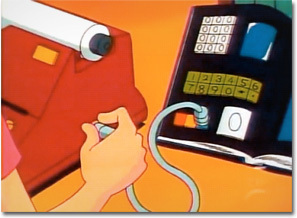
To put this process in perspective, Roger Ebert described the comedic machinations of the Naked Gun movies thusly: You'll laugh, then laugh at yourself for laughing. You may well find yourself rooting for Michael Douglas as he obliterates a phone booth with machine gun fire to spite an impatient man eager to make a call. It's easy to find yourself dancing to Joaquin Phoenix's beat as you traverse any long sequence of steps. None of these reactions are inherently wrong. That's the magic of movies, if not the whole of storytelling in general. 

I made an off-hand comment to a friend on Twitter about how Unhinged was essentially what we'd get if Uwe Boll adapted The Killing Joke but ran out of money and/or lost the rights to the Batman license partway through. Obviously, the film in no way, shape, or form resembles The Killing Joke beyond some throwaway lines that touch on the same philosophies about human nature, the choices we make, and our responsibility in light of the consequences of those choices. That said, the more I thought about it, the more I realized this plot has a stronger tie to the Batman universe than likely anyone involved in the film realizes. 

Put simply, the Joker is no stranger to road rage. 

Joker's Favor is an early, but much-loved episode of Batman: The Animated Series. While typically falling shy of any top spots, it often ranks highly on many best episodes list, and it's not undeserved. It also takes a mundane, inconsequential event and turns it into something far more sinister. An accountant named Charlie (voiced by Ed Begley Jr.) drives home from a bad day at work. His impatience with other drivers ends up getting him face to face with the Joker. Joker lets Charlie go on the condition that he may well ask him for a favor some day. Two years elapse before Charlie, despite having moved and changed his name, is contacted by the Joker to fulfill his end of the bargain from earlier. 

What follows is a rather predictable turning of the tables in the cat and mouse game via an ordinary man being driven to extraordinary actions, though with the saving grace of a timely and graceful step back from the edge. What makes it work is the show's complete and utter commitment to the subject matter. It's played perfectly straight and allows you to suspend disbelief on how things will turn out for those involved. 

Unhinged, just like Charlie's future in Joker's Favor, could go a number of ways. Monsters can be slain as easily as they can be made. Currently, its box office performance (including a delayed release thanks to the Coronavirus Pandemic) is less than impressive, a few million shy of halfway to its 33 million dollar budget (Falling Down was made for 25 million in 1997, a little over 40 million adjusted for inflation). Critics have been equally cold, dismissing it as uninspired, unable to justify its own existence against other films of its stated variety. Those jokes about Crowe's temper seem to have run their course. As for those other comments calling Caren Pistorious' character a Karen... 

20 August 2020

The Great (IN)Famous Texting Experiment

A factoid is commonly used to mean any sort of brief, concise piece of news or information, supposedly because "trivia" is too on the nose. Its practical definition is a little more ominous, that its a piece of speculation or unfounded assertion that gets repeated and spread around so much its simply taken as fact despite a lack of authentication. 

My favorite example is a piece of information that goes something like this, "We only remember 40% of what we hear, 30% of what we read, 60% of what we see..." and so on and so on, the overall lesson or advice being that teachers and educators should engage with their students on a more "visually interesting" level. In fact, I first heard this string of statistics in a Powerpoint class. The truth is there's absolutely nothing to back up these statistics. Trying to find anything resembling a source is akin to tracking the origin of that joke you heard that one time from that one coworker or neighbor who seems to pull such things from the air itself. 

While writing an entry about feature creep in our tiny pocket computers (that just so happen to have tiny telephones in them somewhere) we're all hopelessly addicted to, I remembered something I thought I'd heard somewhere that I used to tell people back when I worked for a cell carrier. I worked in that customer service job from around 2006-2008. By the time I was "promoted to customer" the iPhone was still firmly in the grasp of AT&T, one of the most significant events in the history of telecommunications since the birth of the Baby Bells or the launch of Telstar 1Google had been developing Android for years prior, but this one insignificant marketing tactic was the chocolate to their peanut butter. Still, smartphones, however accessible Apple had set out to make them, were still extremely niche at this point. Our bestselling phone was the Motorola Razr. We were on the verge of introducing unlimited minutes as a widespread offering, and unless you got a special little add-on bundle to your bill, every single text and picture message you sent and received would cost you. To be nickeled and dimed on this would have been an improvement as the real cost was closer to a quarter a pop. We offered various tiers, a few hundred for a few dollars, a thousand for a few dollars more, and unlimited for a fistful of dollars. 

A common story I'd often hear from customers, especially parents with kids old enough to be trusted with their own lines, was how they first grumbled and groaned at texting, calling it a step back and the like. Given the Razr, along with most phones that we weren't calling "dumb" yet, only had a standard telephone keypad with which to write out your 140-ish character message, it's understandable. T9 and other types of predictive text systems were fair (some almost looked forward to see what goofs and typos it would come up with), but hardly practical. Strangely, despite this, the usage of texting kept going up, and those parents who had rolled their eyes and even shaken their fists at the idea of having any texting on their plans were almost happy to have to upgrade to the full unlimited plan. Sure, nobody liked paying more for something already fairly pricey, but at the very least the appeal was recognized, if not fully embraced. 

This did not surprise me, and not simply because of my own addictive personality and a lifetime of clicking buttons to make things happen on a screen. It didn't surprise me because I had heard somewhere, from someone, at some point, about how Nokia, that Finnish phone maker some people still think is Japanese most likely because John Turtoro made a bad career move for a big paycheck and semi-steady work, had proven there was almost an inherent need for texting in a social structure. 

The story goes like this: Nokia hand-picked a small, tightly-knit local village near their main offices for a grand experiment. Everyone in town was issued a cell phone and given a fairly reasonable plan to go along with it. There was a catch, however. The phones could only send and receive text messages. All voice functionality was disabled at the software level. Landlines were also disabled as part of the deal. That reasonable plan was for unlimited texting, so there was no penalty whatsoever for being able to send and receive hundreds or thousands of text messages throughout the month. Naturally, there was much grumbling and groaning, eye rolls, and possibly one or two shaken fists, but I suppose nobody had anything better to do because nobody opted out and the rest of the experiment went off without a hitch.

At the end of the month, Nokia send out a notification to all users that the voice features would be turned back on, landlines would be restored, and as a bonus everyone could keep the phones for another month before they had to find carriers to get plans through. The final twist to the story, if it can be called that, is that although the ability to make and receive voice calls was back in business, the usage of texting had not changed in the slightest. In tracking people's usage of the texting feature (how many per day, to whom, etc.) went up within the first week, and stayed there. There may have been a slight decline when the voice functionality came back, but there was no great exchange or abandonment. Nokia had effectively proven that texting was not a novelty that would come and go, but was in fact here to stay. 

This next part may shock you, but I have found absolutely no truth to this anecdote. It's possible I'm missing something. Maybe the story has simply faded into the background radiation of the web. More likely, the story is semi-true, that a group of people were offered texting plans at no added charge, their habits monitored for a short time, and the data still showing that as it was available to them and didn't carry any added cost (or a nominal one at best) it proved itself useful, practical, and possibly even a necessity. Focus groups aren't anything extraordinary, and neither are public betas. 

Just as the "factoid" about information retention is meant to encourage teachers and educators to be more creative and hands-on with their students (therefore the lack of credibility to the story is tacitly forgiven because it does more good than harm, so the reasoning may go), the takeaway from this story about Nokia and texting is that people don't know what they want. The common scenario is people will ask for X, but their real desire is for Y. For example, people in a survey may insist they prefer a rich, dark roast to their coffee, but a cursory glance at their spending habits shows a preference for milky, weak brews loaded with cream and sugar. There's no deception, simply a disconnect between expectations and reality. The opposite of this scenario is that people will insist to never indulging X, preferring Y over it every single time, only to practically forget about Y once X is readily available and easily accessible. People would moan about texting, calling it useless or even mocking it as primitive, only to wind up using it more than their voice. 

It's almost ironic that we've gone back to writing letters to each other. How much daylight is there between sending someone a brief text message and sending a telegram? The only real difference is there's no longer a middle man. 

When we first got e-mail in our home, the few people I knew who had e-mail addresses (which is a social phenomenon worthy of its own entry someday) often read like fully hand-written letters, lengthy and detailed, as though we were secretly afraid that our teachers were going to look over our shoulders and slap a grade on it. In time, we learned we didn't have to be brief. Next thing we knew, we were e-mailing our cousins thusly:

"When's the Packer game?"

"4:30 our time."

"Cool."

15 August 2020

My PS4 Died But NewEgg is The Real Ghost (BUSTED) (updated)

WARNING: I have the receipts. 

I use my PS4 almost daily. I stream music and shows through it as much as I play games on it. A few weeks ago, I downloaded Star Wars Battlefront II... because it was free. In general, my gaming habits since around the middle of the PS3-era have leaned further and further away from what's commonly known as "Triple A" titles, the big budget games from studios like EA, Ubisoft, Capcom, and the like. It's not due to the various ethical concerns surrounding these studios (though it doesn't help), more a matter of me being an old man with a life and responsibilities. The prospect of a game taking more than 10-20 hours to complete is not a point in its favor. I can understand getting your money's worth; if a game costs 60USD and up, 10 hours probably feels like a letdown, borderline fraudulent. At the same time, I know I've sunk more than 40 hours into some games that didn't cost me a dime, or at least nowhere near 60. 

The point is Battlefront II is a huge game, several gigabytes of data on a terabyte drive. What I discovered from this installation is that even though the game says it's done and installed and ready to rock and roll, it's not actually done. Admittedly, this is a neat feature. The console will load up enough of the game that I can start playing while the rest wraps up while I'm racking up points. I should take a moment to point out that I'm not blaming EA and Star Wars Battlefront II for what I'm about to describe. There was also a Gundam game that had the same issue. That feature I described where enough of the game installs to allow me to start playing doesn't seem to work the same way for most games. That is, most games will tell me enough has loaded upfront for me to dive in while the rest is still in progress. With Star Wars and Gundam, they told me everything was good in the neighborhood until I actually booted up the games and saw a progress bar saying it wasn't quite done yet. 

Now, why is this a problem, exactly? Well, the PS4 didn't seem to know how to handle this setup. The day after I "installed" Battlefront II, I turned my PS4 on to get an error message that it hadn't been shut down properly and needed to run some diagnostics before restoring things to normal. That usually happens when there's a power outage or if you accidentally unplug your console while it's in the middle of something. I didn't think anything of it at first. The second time it happened, now I'm a little annoyed. That was also when I noticed the in-game progress bar letting me know the game my console told me was fully installed was not actually fully installed. I poked around a few forums and found this wasn't anything unique. In a fit of frustration, I uninstalled Star Wars and never had the issue again... until I downloaded the Gundam game and lather, rinse, repeat. 

What followed were all the usual signs of slow death: locking up on loading screens, installs taking longer than usual before quitting altogether, the console needing to be restarted by plugging the controller into the console directly instead of using Bluetooth, and so on. Finally, after an attempt to rebuild the database (after learning the PS4 has a "safe mode" just like a PC) and trying to install a new game, the PS4 gave up and wouldn't get past an error message. It was time to replace the hard drive because either it wasn't that great to begin with, or I had asked too much of it without routinely maintaining it (rebuilding the database, erasing unused files, etc.). Fortunately, replacing the hard drive on a PS4 (and also the PS3) is extremely simple and straightforward. There's no "right to repair" issues going on here; Sony encourages people to upgrade their drives, and has a fairly broad list of supported drives you can get from anywhere. 

Buying hard drives on Amazon can always be a bit of a gamble, and I definitely don't recommend it; sellers don't always know what they have and that makes doing any kind of research a game of Russian Roulette. So, it was Newegg to the rescue, and that's when things got worse. In the interest of full disclosure, some of what's led to this current state of affairs is my fault. I don't deny that. My issue is with the complete lack of a response I've gotten from either Newegg or the vendor who shipped me the drive via Newegg

Here's the mistake I made: I forgot how big my PS4's hard drive was. Somehow I had it in my head it was only 500GB. As I said, I don't play a lot of big-budget games, so most of my installs are within 4-5GB at the most. Maybe a few were closer to the 30GB mark, but I was probably years away from getting to that 500GB threshold. It's simply something I didn't think about and didn't double-check. So, I ordered a 500GB drive from Newegg that would ship via a company called Evo Micro, based out of Florida. The drive had a lot of positive reviews and many specifically mentioned using it in PS4’s.

There I was, on the 7th of August, having only placed the order maybe an hour or two ago. I hadn’t gotten any notice about my card being charged or my order being fully processed. Everything was still up in the air. I go to my order history and try to change course. There’s no option to outright cancel the order since it’s through a third-party seller instead of Newegg directly. I click on the option to contact the seller and I explain the situation. This is an email I received with the transcript of the message. 


I get no response for 3 days. Granted, you’re advised that in the case of 3rd party sellers, replies can take one or two business days and this was the weekend, so I may end up having to just return the drive when it arrives. My card gets charged and a tracking number gets generated a few days later, but only after I message them again on the 10th. 


Bear in mind, I’ve gotten no response from the seller. I haven’t even gotten a “We heard you, but sorry.” sort of reply (which I found later is a typical response of theirs when it comes to addressing grievances). It would have been annoying, but at least it would be an acknowledgment. In any case, they couldn’t exactly have helped me because they didn’t have a Terabyte version of the drive I’d ordered. That is, it wasn’t an option I could have selected for that particular brand on that particular listing, like when you can select the size or color of a piece of clothing. I would have had to place a whole new order. I figured that may have been why they hadn’t responded, that it wasn’t something they could simply switch over and then charge me the difference, but rather a whole new order. Again, I’m fully accepting of my gaff. 

On the 9th of August, I place an order for a 1TB drive. This one is coming from Newegg directly. That order goes though by the 10th when I send my second message to Evo Micro (the seller of the first drive). Since I couldn’t find a terabyte drive through them that was within my specs and price range, I’ve resigned myself to returning the drive, going through some RMA process and dropping off a package at UPS. A hassle, but again, my own dumb fault. 

Both drives arrive the 14th of August, Friday. I have still heard nothing from Evo Micro. Zero acknowledgment. The installation of the 1TB drive into the PS4 goes smoothly enough. All of my save data and various other settings were already backed up thanks to Playstation Plus. The rest of that process is just time spent. Needless to say, let this be a lesson to all of you out there. There are two kinds of backups: backups that fail, and backups that fail a little later. When was the last time you backed up your stuff? Trick question, it’s been too long. Go do it now. While the Terabyte drive sets up shop in the Playstation, the 500GB drive remains untouched in its bubble-filled envelope. It is for all intents and purposes utterly immaculate. Worst case scenario, my PS3 gets an upgrade, which may require me getting another drive to serve as an intermediary storage medium that I was likely going to buy anyway. I start the return process to see what needs to happen next. I’m going to call this my second mistake as it may well not do me any favors in the long run. 


Despite effectively getting my PS4 back, I was not in a great mood that day, and it’s not much better as I write this the following day. Returning the drive was going to cost me 12 dollars. 12 dollars to return a drive that cost me just over 30 and is completely untouched, unused, and undisturbed. I got angry. I'm not going to share the messages I sent to both Newegg and Evo Micro as they mostly just repeat what I've already asked of them with more colorful language along with airing my grievances about getting the silent treatment. In my defense, I’ve been ignored twice going through customer service. I reached out to try and make the situation right and find a way to let this small business out of Florida make a sale. I have gotten ignored, and Newegg has yet to respond as well. Yes, I could well just go for shipping it another way which will cost me significantly less than the 12 dollars, but I’ve got two issues with that. First, many of the reviews for Evomicro mention restocking fees, which means I have no idea whether or not I’m going to get that full refund regardless of what Newegg tells me. Second, given Evo Micro has ignored me up to this point, what’s to stop them from saying they never received it despite my tracking information confirming someone there took it back? This is hardly worth taking any sort of legal action, and there’s a distinct possibility they’re well aware of that, that I’ll just eat the cost and keep a drive I don’t necessarily need. They still make their sale, and as far as they are concerned, our business has concluded. 

I’m not totally unwilling to give either Evo Micro or Newegg the benefit of the doubt that they are simply swamped and unable to answer customer correspondence in a timely manner. I get everything is inundated with one damn thing after another with interest. There is still a distinct possibility this can all be turned around and I will sing their praises from the hills. I’m not even asking for much. All I wanted was a bigger drive. I wanted to pay more to get more than what I initially asked for. Now I don’t want to give either of them anything whatsoever. If they’re going to pretend I don’t exist, it’s only fair I return the favor in kind. 

UPDATE: I emailed Evo Micro once again today with the links to this entry. At the same time, I contacted Newegg and managed to get someone in their chat support. The chat support rep alerted me to the response and I checked my messages. Sure enough, there it was. They apologized as they are understaffed and agreed to give me a full refund, along with keeping the drive. Meanwhile, Newegg is submitting an internal report to make sure the refund goes through. 

I never wanted any of this to reach this level. 

08 August 2020

Razer Left Me Wanting

As I've likely prattled on about before, I use a mouse left-handed. I am not actually left-handed, at least when it comes to handwriting and most of my artistic ventures. The art I make on my computer benefits from a mouse over a pen tablet since the number pad does most of the work whenever the slower, precise movements of a mouse are not adequate. Most legit lefties I know have cruelly forced themselves to simply use their mouse right-handedly, especially when they're at work, and especially at work if someone got it in their head that everyone should have a so-called ergonomic mouse. Fortunately, most of the mice at my work are as ambidextrous as they are basic. 

As much as I don't mind keyboard shortcuts, having some of those shortcuts on the same hand as my mouse is extremely convenient. Perhaps it's from years of console gaming wherein all your important moves are managed by your thumbs rather than your fingertips. Before the Apple Pencil, my favorite stylus for my iPad was from Adonit, and it had two little shortcut keys near the tip. I mapped my un/redo keys to these two buttons and I got so used to it that when I used a real pencil and needed to erase, I instinctively squeezed the end I was holding. As for the mice I've had, there have been many, and I'll spare you the long, drawn-out narrative and get to the point by showing you the mouse I'm currently using at home:

No words. Should have sent a poet.

I like the Maus. I love the styling, it's got a good heft and weight to it, and the wireless has never been a hindrance to me. My only real gripe about it is it's a little small. This is hardly a dealbreaker as you shouldn't necessarily be resting your palm on your mouse anyway. Your forearm should be parallel to your desk and you shouldn't drag your arm on the surface, just as you shouldn't necessarily be resting your wrists in front of the keyboard. When the workaround is getting rid of a bad habit, I can let some things go. Given that, there is another gripe that's a little harder to ignore. It's that little silver button below the scroll wheel. It controls the DPI. 

If you don't know, DPI stands for Dots Per Inch and it refers to the sensitivity of the mouse, how fast you can move your cursor across the screen. The higher the DPI the faster and farther the arrow flies across the screen with less movement of the mouse itself. Most of you probably never bother with this, especially if the computer isn't technically yours (even if it is yours in the sense that you use it regularly and are expected to be productive with it). Some of you probably know you can adjust this sensitivity setting in the control panel, especially if some jerk who used your computer before for some reason needed the sensitivity way down so you'd have to practically sweep everything off your desk just to move your cursor halfway across the screen (or picking it up and putting it back down over and over, feeling a little more ridiculous each time you repeat the motion). 

By the way, that so-called "natural" option for scroll direction can kiss my ass.

Some mouse makers have decided burying this slider in a menu not many people bother with until something goes wrong and solved the "problem" by allowing you to adjust the sensitivity of your mouse on the device itself. It makes sense, but I've always wondered why the button to do so is typically below the scroll wheel and tilted towards the wheel (as it's following the slope of the mouse's shape) to make accidentally clicking on it virtually inevitable. The Maus compounds this problem by giving you the option of about a half-dozen different DPI settings, at least four of which seem to be for people who move their mice by gently breathing on them. Maybe on a 4K monitor it evens itself out, more pixels on screen means a higher DPI is needed to cover the same distance. 

There is a genius alternative to this that I hope more mouse makers catch on to. It's called a clutch. The idea is that your mouse is set to a higher DPI to let you navigate the screen faster. When you need to slow down to make more precise and controlled movements, you push a small button on the mouse to bring the DPI down to its lowest possible setting. When you need to go fast again, simply release the clutch. 

It's currently on the Razer Basilisk and the Logitech G502, both of which are ergonomic mice with no left-handed option. In fact, Razer used to be rather friendly to the lefty crowd, with left-handed versions of some of their most well-regarded mice, including the Death Adder and especially the Naga. The Naga has a full 12-button keypad for the thumb, which may sound crowded, but is fairly navigable. I had one of these mice for a long time and it served me well. I speak of it in the past tense because the middle click gave out. Despite their internal switches being rated to some insane number of presses, the one under my scroll wheel missed that QA inspection. 

Fortunately, Razer has a pretty generous support and warranty policy. Unfortunately, that doesn't guarantee they'll be able to replace or repair everything in their product range. As the left-handed Naga was no longer made, they offered me a short list of mice to replace it with, which were all right-handed ergonomic mice, including the Death Adder, whose lefty counterpart had also been axed recently. 

How's about HELL NO!?
Further mucking things up was the oversight of these many alternatives being out of stock. The silver lining to all of this was that I could opt to take a store credit and wait for a mouse they had coming out called the Viper. I could conceivably have gone for a cheaper mouse that was ambidextrous, but that would have left me with almost half of the store credit left over and nothing to use it on besides maybe a really nice mat. The choice before me then was either to take a gamble on this new mouse, or remap the middle click of the Naga to one of its many programmable buttons and therefore throw off my entire workflow (as I would have proper middle click on every other mouse I'd use). I chose the former option. 
Have I ever mentioned how much I love braided cables?
The Viper has been good, but it is so very just shy of perfect it almost brings the whole thing down. For what it costs and what it offers as a mouse, it's overpriced compared to other offerings in the catalog. Given it cost the same as my Naga did when it was new, it really felt like a downgrade. However, as I didn't have much of a choice what with being given store credit and all, I figured its size would be its saving grace, being near enough to the Naga that I wouldn't have to reorient myself with its feel. It gets a lot of other things right; it's got the braided cable, the DPI switch is out of the way (on the bottom of the mouse, in a small recess that you need a pen to push), and it is truly and legitimately ambidextrous. 

While it doesn't have the full 12 keys of a Naga, it's got two shortcut buttons on either side of it. Assigning my two most common shortcuts to them has, for all intents and purposes, made up for it not being a Naga. What it doesn't make up for is Razer's slow crawl towards a right-handed catalog. There's also the weight, which is my biggest complaint about it. For its price, the Viper feels cheap, almost fragile. I'm almost convinced the cord weighs more as sometimes the cord slipping off the back of my desk will pull the mouse down with it. It hasn't sent it tumbling into the narrow chasm between the desk and the wall, and I doubt it would, but I don't get why this mouse needs to be this lightweight. 

Computer mice occupy an amusing space of product design. Once upon a time, the computer mouse had to be the size and shape it was to accommodate a rubber-coated metal ball. Too big and the mouse would be hard to move. Too small and the ball would just as soon slide on a surface as roll. More importantly, the mouse had to house the mechanism needed to make sense of the ball's movements, little roller pins and optical sensors reading off tiny slotted flywheels. Later on, the optical sensor took center stage and could read off the surface directly. This meant the pins and flywheels had to be replaced with a few more chips and other components because it had to do more processing power to make sense of what it was seeing. As time went on, those components became smaller and smaller, with less hardware needed overall for the sensor to make sense of where it was on your desk. This made for a fair bit of empty space inside the mouse. 

One of the most audacious uses of that empty space was an arrangement of slots for metal weights. Weighing down a mouse seems like a weird thing to do, but just like the DPI adjustments, sometimes you need to be able to move your mouse in a fairly controlled and precise manner. A high DPI combined with a weighty mouse gives the best of both worlds. 
So you now understand the weight of the situation.
The Viper definitely has the empty space for such weights, but the only way I'm going to get that is the DIY route, and I'm not about to start drilling holes and prying stickers and panels off of an 80USD mouse (that's also what the G502 costs, weights included). 

Luckily, I've found a few alternatives outside of the Razer catalog such as Steelseries and Corsair. They don't have weight options, but they are notably heftier than the Viper along with sharing a similar form factor. That includes those shortcut buttons on either side of the casing. To be fair to Razer, since its release, the Viper's price has come down a little. It's still not low enough for me to begin exploratory surgery, but I don't hold the price point against them anymore. Last week, I was looking through their site to get some specs for a LinkedIN post I'm writing covering this topic in a little more work-related depth. I saw they offered two new versions of the Viper, one wireless, and one labeled "mini." I thought all my problems were solved. Wireless mice make use of that empty space by storing a battery. The battery adds weight, and I've got hefty where wimpy once was. However, Razer, in their wisdom, found a way to make the wireless Viper weigh virtually the same as the wired version. That's okay, I thought, I've got an option. Yes, the mini is smaller, but it's also about half the price, well within the territory of being modified with no real blow to the bottom line. 

Then I got a better look at it. 
Can't see the problem? That's okay. I didn't spot it right away, either. 
... 

... Razer? I want you to look at me. I want to ask you a question and I want you to think long and hard about your answer before you tell it to me. I want you to think about all that I've said about the past designs of your products which I have praised you for. Okay, here we go:

How can it be an ambidextrous mouse when the shortcut keys ARE ONLY ON ONE SIDE!?
It's the LITTLE things....
Look, I get that making left-handed versions of your ergonomic mice isn't ideal for you. There simply are not enough left-handed mouse users to justify production on that scale. 

By the way, LoFree isn't off the hook either.
Define symmetry for me, please.
In their defense, the place on the right-hand side where some shortcut keys would be nice is taken up by an adorable little storage compartment for the wireless dongle as well as the charging port. As I said, I do like the Maus, but I prefer it as a portable accessory for my iPad when I need to use a mouse with it. The same goes for the keyboard I've got at home right now. It's fine enough for the Mac mini, but it's better suited to accompany a tablet. 

A wise one once said that art is never finished, only abandoned. I suppose I've got the same philosophy with my workspace, a constant work in progress. That reminds me, I have to get back to designing my new desk. 

19 July 2020

The Right to Peaceably Accessorize

OR: 
Petition for an Undressing of Grievances.

The upcoming iPhone 12 will supposedly not come with a charger, referring specifically to the little white wall wart that converts AC power down to 5V at around 1A. Some people are a little troubled by this. I wouldn't expect anything else, but I have to wonder if it's just change in general that bugs these people so much and not the specific changes themselves. As a wise one once said, some people simply love to complain, even if they get exactly what they want. 

I had an iMac. My family bought it in 1999 and it went with me through college. There was a hullabaloo around its release over the lack of a floppy disk drive. I may have even been laughed at a little for having an external floppy disk drive, like I'd been suckered into buying extra what should have been included. The irony is that I don't think I ever once used that floppy drive. I didn't have a flash drive yet and wouldn't until about 2005. Given I was in film, floppy disks were useless to me; nearly all the games I played (all 2 of them) were either downloaded from a website (imagine that) or came on CD-ROM. The only "disk" media I ever used during those 5 years was the Zip disk from Iomega. Each chunky cartridge took 100MB and were fairly inexpensive compared to what I was spending on video tapes. The most awkward using the damn thing got was when I had to leave my Zip drive with one of my professors because she didn't have one of her own to see my project. I call it awkward because I gave her one that needed an external power source so I could briefly declutter my desk and use the other Zip drive that was USB powered. Yes, I had 2 Zip drives while the floppy drive gathered dust. Speaking of awkward cable management and third party accessories... 

1. Wireless Charging

I have an iPhone 7. It does not have wireless charging capabilities. That came along with the 8. I'm not bothered by this. I do sometimes worry about the cable port wearing out from repeated un/pluggings, but in my experience, that happens around the exact same time the phone is ready to be retired and I'm eligible for an upgrade regardless. If I absolutely get desperate for a wireless charging solution, I have a battery case that charges through a Qi pad. Speaking of Qi chargers, Apple still does not produce their own version of it, with their website listing third party companies like Mophie or Belkin. It's rather odd when you think about it that Apple wouldn't offer you their won't take on something from the word go. People accused them of trying to corner you into buying their wireless earbuds when they took the headphone jack off of the iPhone 7 and beyond, yet wireless headphones and earbuds had been out for long before then and were perfectly capable of working with your iPhone. As nefarious deeds and Machiavellian machinations go, there's more malice behind leaving grocery carts out in the middle of the parking lot. 

2. Pack-in Accessories 

All the complaints over the years about the included earbuds with iPhones, but now that an equally overpriced accessory is being axed, it's a problem? The wall adapter on its own typically runs around 20USD, with the bulkier iPad version going for more (and all to deliver an extra amp or two). Here's the dirty little secret nobody at Apple likes to talk about: you do not have to use their charge adapters. The reason they recommend them, or the reason why any company will recommend a certain brand (their own or not) of batteries or cables or chargers or whatever other accessory you can think of, is because of their Quality Assurance as much as their desire to keep you in their little circle of corporate synergy. When their products are tested, it's not worth the effort to seek out and try every single third party version of something. It's more efficient to try what they know will work and slap a "for best results" addendum on their literature or support articles. If this sounds scuzzy or scummy, I won't disagree, though I would offer that they could just as easily keep their connections and hardware specs to themselves and actively go around shutting down every third party enterprise under the sun. This is why we get a "for best results" rather than "One of us! One of us!" It's not about taking the lesser of two evils, but rather a deep understanding on the part of Apple, Samsung, and whoever else is still in business regarding the customer/manufacturer relationship. 
Here's another dirty little secret about electronics manufacturing: Many of the devices you own contain components made by only a handful of companies. Like the accessory paradigm we just talked about, there's nothing overtly shadowy or sketchy about this arrangement; it's very efficient and keeps the price of these devices down. Can you imagine if Microsoft's Surface team had to mine and smelt their own iron, gold, copper, tin, neodymium, and a whole host of other raw materials to get that magnesium-shelled slab into your lap? We passed the point when aluminum was more valuable than gold decades ago, and I doubt anyone has a desire to go back to that way of life. 

3. First Rodeos

Carrying on from the second point, when you do a trade-in for a new device (which you should do, or consider donating to a charity such as Music & Memory), you're rarely if ever asked to hand in your cables, charge adapters, and other accessories. This is because there's virtually nothing of value to salvage out of what essentially amount to strands of rubber-encased copper and possibly a few magnets. Even in terms of value as scrap, that device you're turning back in is worth far more than that cable you plugged into it every night. For starters, if you took even semi-decent care of that device and it maybe only has a few scratches or at worst a cracked screen, that device can be refurbished and sold again to users who maybe don't need all those hot new features. Music & Memory, for example, use these devices as music players for Alzheimer's patients. Many of those older "dumb phones" are repurposed as emergency call devices for the elderly since you don't need a SIM card to call 911. Couple that with them being lighter and smaller than those glass slabs, they're practically set and forget until needed. 

As for those cables and adapters and such, let's have some fun. If you still have a drawer full of your old devices (Kindles, iPads, etc.) that you haven't yet donated or traded in, I'd like you to go to that drawer now and take out all the cables. In fact, go and gather all the USB and power cables you've got and put them in one place. Let's face it, you probably need to organize these things anyway. I'm going to go out on a limb and guess that you have more than one. I doubt the most mental minimalist has only the single USB cable and power adapter that came with their phone. At best, you may only have one of those little wall warts that take on the Herculean task of throttling 120 volts of alternating current into a direct 5. It's fascinating how well USB has lived up to the Universal part of its name in the last 10 years alone. Your local convenience store probably has a bin of adapters to let you plug your phone into the cigarette lighter socket of your car (another astonishingly universal standard). 

While the general consensus is that a wire is a wire is a wire, it's true that not all cables are created equal (those pesky third parties). Some are only capable of delivering a certain amount of power compared to others, others are absolutely rubbish at power but great for data transfer (and vice versa), and the overall length of the cable can affect how efficiently it charges your device. You likely have that one wire in that pile we've assembled that you keep around for reasons you don't remember if only because, despite being a USB cable like all the others, it only seems to work with certain devices. I'm sorry to say I don't have any better idea of what's going on there than you do. 
Fortunately, it's easy enough to do some simple bench tests to see which ones can cut the mustard and which ones belong in the bin (I mean, what else are you going to be doing today?). If you want to be extra super-especially doubly sure you're getting all the data you need to make these decisions, you can purchase a cable tester for a few dollars and put it next to that battery tester you never use (the one that's in the drawer with all the cables and Kindles and such). 
Here's one in action:

The tricky part of this test will be those wall adapters. We mentioned amperage before, and if you're not familiar with what that is, the important takeaway is it determines how quickly power is transferred over the cable. Bear in mind, though, that higher amps is not always best. For something like a tablet, it's essential, lest your charging times take longer than overnight. For phones, while it will charge them quickly, there's the added downside of degrading your phone's battery over time, shortening its operational lifespan. As for how to find out what amps your wall adapter is capable of outputting, they're typically printed on the casing. Most are legible enough, but others may give you some grief. 

Can you read that? Neither can I.
Can you read that? Neither can I. 

The best course of action would be not to bother with them, or at best relegate them to charging those devices you don't need in any big hurry. It's also worth mentioning that while your computer's built-in USB ports are perfectly capable of charging your devices, they rarely output more than one amp. Again, that's good enough for a phone, but a tablet will take longer and may not actually reach the full 100% no matter how long you let it sit. 

For the record, I don't buy Apple's PR spin about environmental considerations when it comes to not including wall adapters with their devices. Put simply, it's one less thing for them to make en masse, you likely didn't need another one anyway, and if you don't already have a small accumulation of alternatives then now is the perfect time to change that. 

My work here is done. APPLE APOLOGIST... AWAY!

21 June 2020

Hold Your Tongue While Saying Apple (an apology)

I haven’t owned an Apple-based desktop since at least 2005 when I abandoned the Bondi Blue iMac my parents bought in 1999 and went with me to college, shifting gears to a Compaq Presario as it was all I could afford. I knew of OSX and was thoroughly impressed by it, using it on occasion for some classes, but I felt that Windows XP had offered me the best of both worlds, a wider library of software (Windows) coupled with a streamlined and no-nonsense user interface (OSX). This was my standard for a few years until for reasons I don’t quite recall the full details of, I wanted to give Linux a try, namely Linux Mint. While impractical in practice and certainly a bad decision in the moment, the passage of time has healed those wounds and left me overall appreciative of the experience, scars and all. 

I briefly returned to Windows XP with a Toshiba laptop which got a fair bit of use out of before handing it off to a friend no stranger to computer troubles as a backup device. I didn’t miss it as Sony’s Xperia Z Ultra found its way into my heart as my daily driver. Its large, high resolution screen made for a thoroughly satisfying drawing experience, migrating me fully from traditional to digital art far more effectively than many previous gateways I gave a fair shot in the past. My favorite drawing app was Zenbrush, and when its major upgrade was going to become an iPad exclusive, I knew I was going to have to go back to Apple. While my impressions of the early iPads was far from positive, I’m happy to say I was proven wrong on most counts as it became a choice tool among a number of digital artists for its convenience and relatively affordable price point. As such, I’ve been drawing on iPads (a mini and a Pro) for some 4-5 years and I have practically no desire to draw on anything else. 

For the most part, this has worked out beautifully. Then, I tried my hand at vector artwork, and as I learned from Ash Vickers of Megacynics fame, vector art is done with a mouse. I also started doing more CAD and 3D work as part of my job and it began to creep over into my non-work workflow. This is another art form that benefits from a mouse rather than a stylus and touch gestures, though some prefer it to the bar of soap. 

A few of my art friends were in love with all things Microsoft Surface and I nearly joined in, seeing it as once again the best of both worlds, a touch screen drawing interface (iPad) with a full desktop environment to run a host of apps (Microsoft). In the end, I decided that it was the latter half of that equation I needed most of all, and therefore finally settled on a new Mac Mini. I’d wanted one for years and now presented itself as the best time to invest. 

It arrived within the week and within an hour, I was regretting my purchase, to the point of attempting to get a return going. Unfortunately, B&H’s normally very generous return policy stops at computers, which they only seem to sell through grit teeth and clenched fists given their primary business is photography, with all these “digital” stuff par for the course in keeping up with the almighty Amazon. The source of my frustration was with the performance of the two applications I’d intended to use most, Sketchup and Inkscape. The performance of Sketchup (particularly Sketchup Viewer) wasn’t that big of a deal as the CAD program proper worked just fine and as well as my desktop at work (which has largely similar specifications to my Mac Mini). It was still perfectly usable, simply not ideal. As for Inkscape, I was dumbfounded at how poorly it ran for such a lightweight drawing program. Whatever shape I wanted to draw was so far behind where my cursor was I could count a full Mississippi, and for something that’s not running “by wire” so to speak in a browser, that’s simply unacceptable. I was furious. I refused to believe this was as good as the machine worked given what I’d seen others use them for, including editing 4K video in Final Cut Pro

But that’s the rub. Final Cut Pro is made in-house by Apple. It’s developed from the ground up to work on their machines and their machines alone. For as demanding as it is in terms of hardware, it’s equally optimized to make the most of it. Inkscape is multi-platform and open source, giving its users the resources necessary to compile their own version for their particular favorite flavor of Linux. The team behind it is essentially working on the program out of the goodness of their hearts (and maybe to stick it to Adobe’s domination of the market with their Illustrator package). The point is just because a program is a lightweight in the system requirements market doesn’t mean it’s suited to the platform it’s ported to. I’d made an Instagram post showing Inkscape in relative inaction and intended to put this all in a blog entry to serve as an open letter to Apple in hopes they could give me some advice or offer some options to make the most out of my mistake. I slept on it and tried the next day to see if Inkscape was an inkling of what was in store for trying other apps. While I had no plans to use it, I downloaded Autodesk Sketchbook and performed the same basic test I did with Inkscape

The results were astonishing. 
Needless to say, I felt very silly. I had completely dismissed a perfectly capable of machine as near-useless on the power of testing two apps, one of which was simply not coded well in the first place. At the same time, I’m obviously relieved this computer is going to work out, albeit with a few different software options to make up for Inkscape running like molasses having an existential crisis in winter. Still, there was all the work I’d put into my write-up up until this point. I didn’t want that to simply end up in a bin, especially since most of what I had to say about the overall user experience is still valid. I definitely feel that OSX has fallen behind the times and is a branch of the Apple tree the kitchen of Cook would just as soon see wither away as their phone and tablet sales have been far more lucrative to them. For my money, there’s still plenty of gas in the tank until we swap out the old fossil fuel system for something more solar in nature. If you ask most Apple users their favorite part about being part of the full JobsWozniak, Ive, & Cook experience is the ecosystem, the synergy shared across the range of devices. Microsoft tried to have this with their own mobile phone system before letting that dream fly out the window, and Google has made a good effort of it between their Chromebooks, Pixels, and dealings with Samsung’s Galaxy lineup. While I don’t think Apple’s approach to all-inclusivity is a paragon of perfection, it’s still leagues above its kin. The Surface line is catching up with their upcoming offers of a dual-screen phone, but I’m happy in camp Cook for the time being. 

Until then, maybe there’s an off-chance someone at Apple can look upon this long-winded journal of a former Mac user who came back to the fold having only spent serious quality time with OS 9 some 15 years ago. It’s not a typical blog entry, but a dedicated page that can only be accessed with the following link. 

Make of its meanderings what you may.